 DE
DE  EN
EN 
Support · FAQ
Shut down idle PCs safely without interrupting real work
Auto Shutdown Manager (ASDM) does more than wait for mouse and keyboard silence. It can evaluate time rules, running applications, network activity, performance counters, active devices and other signals before deciding that a PC is truly idle.
Quick answer
Idle shutdown is safest when “idle” means no productive user, process, network or time-based reason to stay on.
ASDM lets administrators define what counts as productive work. During office hours or protected core times, shutdown can be blocked by policy. Outside those windows, the idle timer can still stay soft: if someone works late, runs a backup, presents slides, transfers data or keeps an important network device active, the timer resets and shutdown waits.
Why this matters
Fixed shutdown times are easy. Correct shutdown decisions are harder.
A simple “shut down at 6:30 pm” rule can save energy, but it can also interrupt late meetings, maintenance, long-running tasks or users working outside normal hours. ASDM combines clear time policy with deep idle detection so IT can protect working users and still remove unnecessary runtime.
Allow shutdown, but respect users
Useful outside protected hours: ASDM may shut down only after the configured idle period and only if no productive signal is detected.
Try shutdown with user decision
Useful when IT wants a planned shutdown attempt but still gives active users a chance to continue their work.
Enforce only where appropriate
Useful for kiosk-like systems, lab devices or fixed-purpose PCs where shutdown must happen at a defined time.
Idle detection depth
Signals administrators can combine before a PC is considered idle
The strongest setups do not rely on one signal. They combine time policy, user activity and system activity to avoid false shutdowns.
Applications and window titles
Keep a PC awake while known applications or wildcard-matched windows are active, for example presentation, backup or media tools.
Network traffic and devices
Detect productive network traffic or keep PCs awake while defined TCP/IP-enabled devices respond.
Performance counters
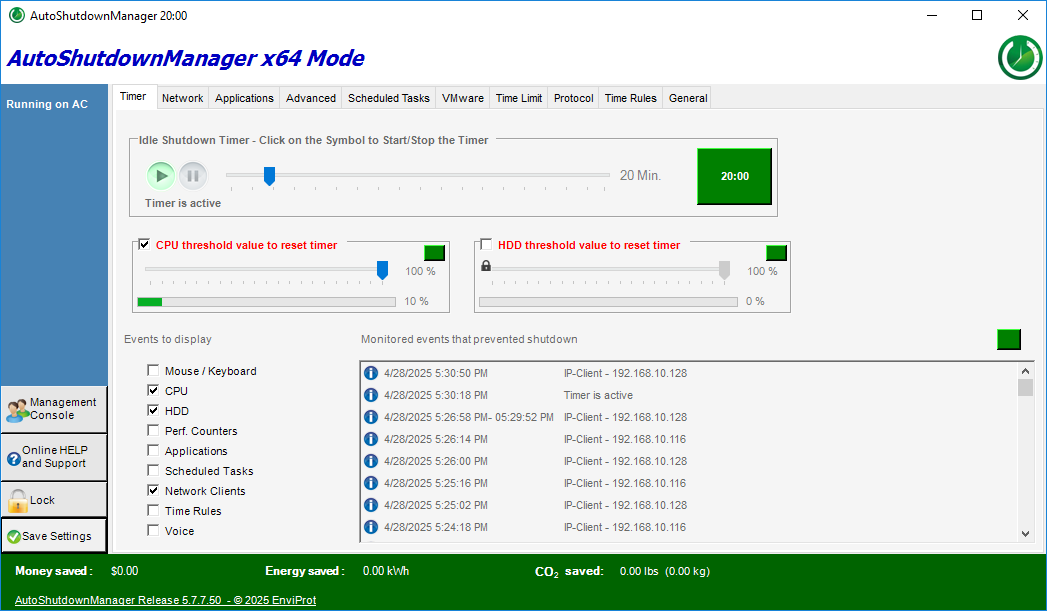
Use Windows Performance Counters to watch CPU, disk, process, service, network or other measurable activity.
Acoustic level
Prevent shutdown during calls, audio work or meetings when microphone level indicates activity.
Time rules and core hours
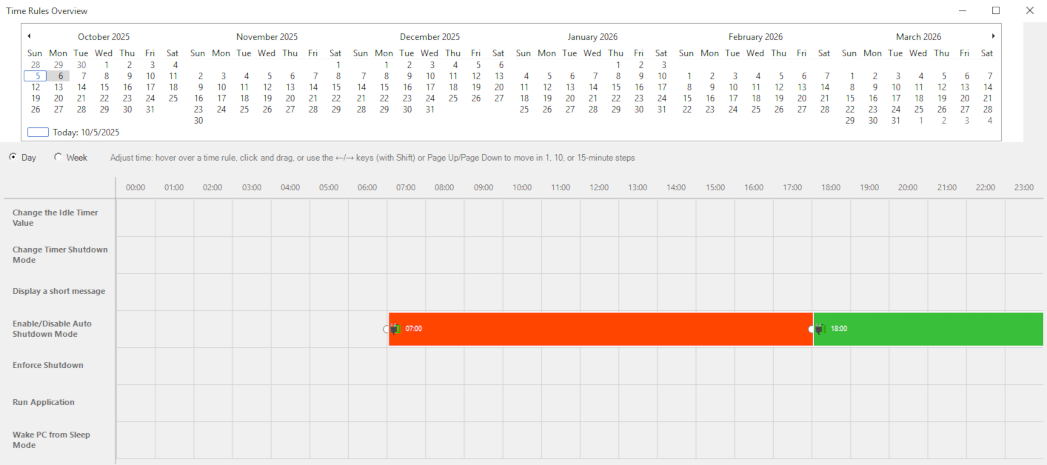
Protect office hours, school hours, maintenance windows or department-specific core times with central time policy.
Document safety
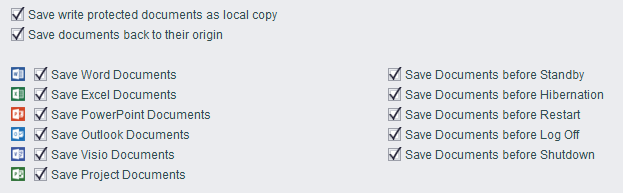
Before shutdown, ASDM can save common open documents so energy savings do not come at the cost of user work.
Policy pattern
Hard office rules, soft edges for real people
Core hours can be protected by time rules. The edges around those hours can stay flexible: ASDM can watch for productive signals before shutdown, so a user finishing a report at 6:20 pm or a process still transferring data does not get treated like a forgotten idle PC.
Proof examples
Configuration examples that matter to IT teams
These are the kinds of checks that make idle shutdown practical in real networks, not just in a lab.
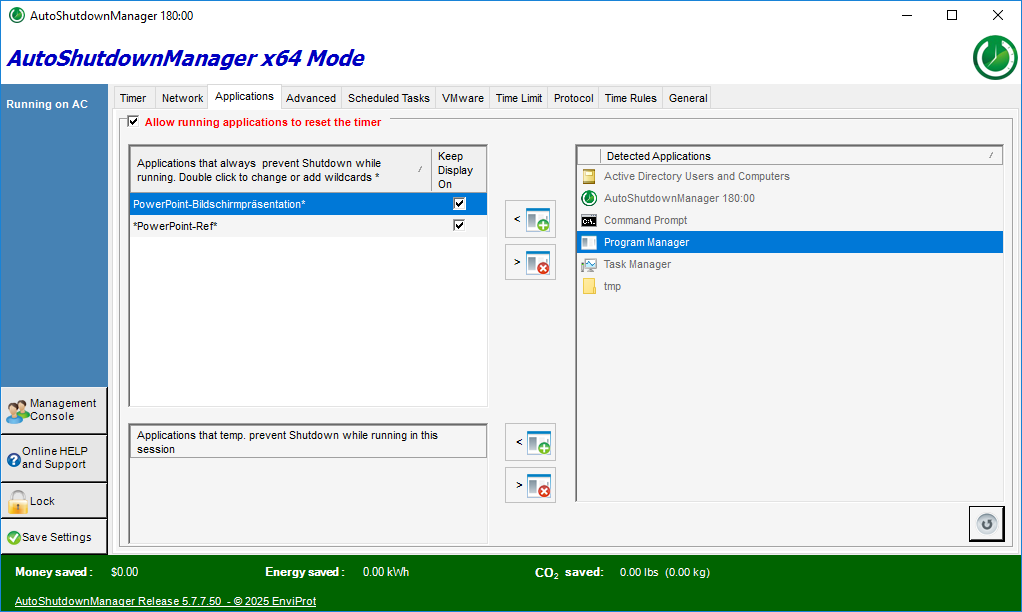
Do not shut down active business applications
Match running applications or window titles, including wildcard patterns. Useful for presentation software, backup tools, long-running installers or any user-facing application that should keep the PC awake.
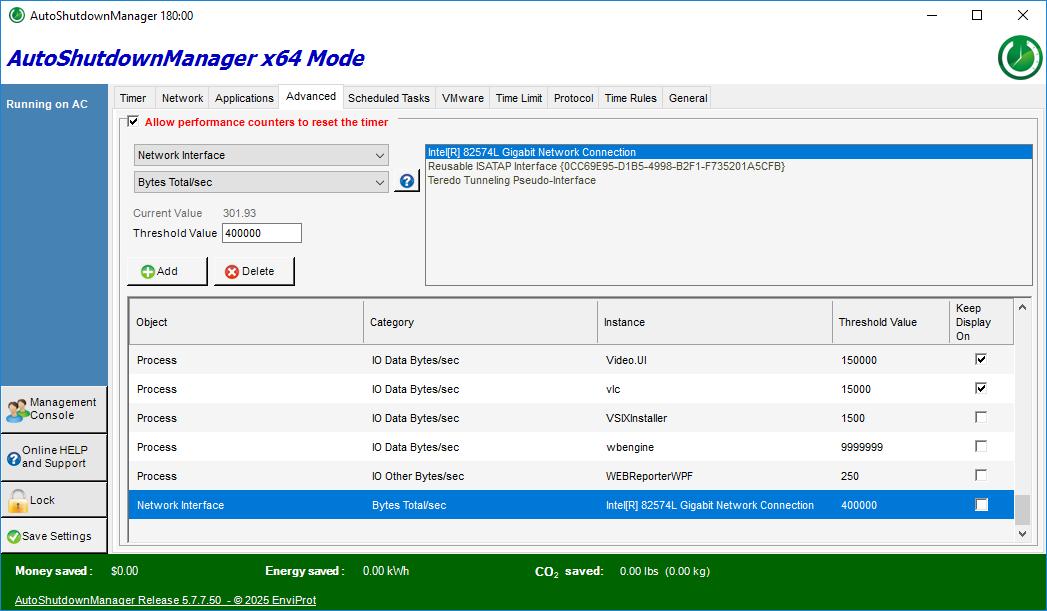
Use performance counters for precise “still working” signals
Admins can monitor activity such as process I/O, network throughput or other Windows Performance Counter values. This is useful when a task has no obvious UI but still performs real work.
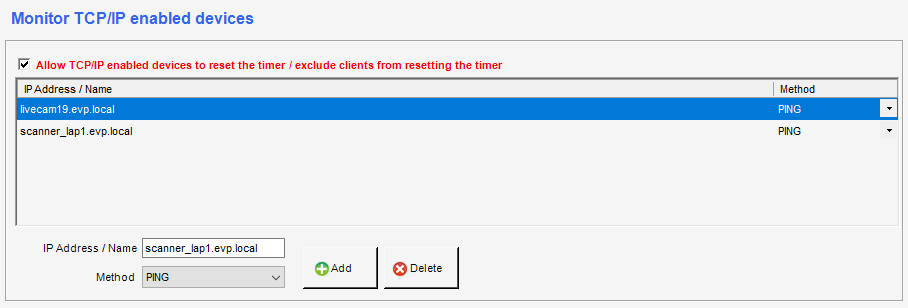
Respect network context and connected devices
Network devices, servers or other IP-enabled equipment can be part of the idle decision. Shutdown can be suppressed while the defined device is still reachable or network activity shows productive work.
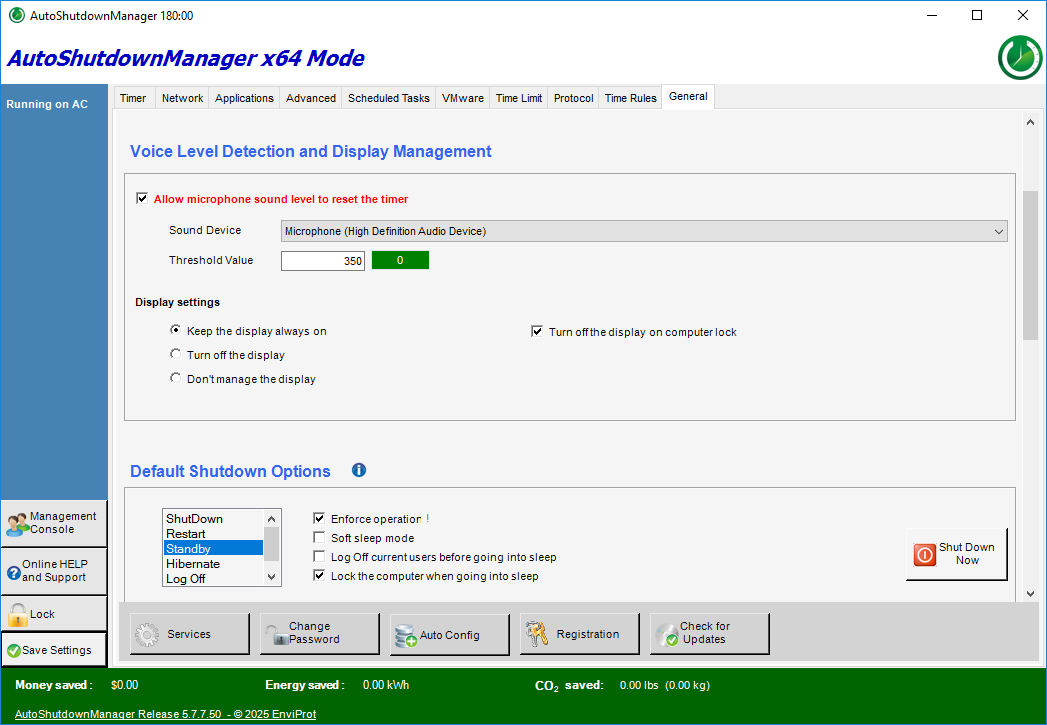
Protect calls, meetings and audio activity
Acoustic level detection can keep a PC awake when microphone activity indicates that the user is in a call, meeting or other audio-driven workflow.
Combine timer, events and time rules
The idle timer counts down only when no configured productive signal resets it. Time rules can change shutdown behavior by hour, day or date, so protected core time and flexible after-hours policy can work together.
Protect documents before shutdown
Safe shutdown is not only about detecting idle state. ASDM can save common document types before standby, hibernation, restart, logoff or shutdown.
Protect core business hours with time rules
Time rules can prevent idle shutdown during core business hours and then allow controlled idle shutdown outside those windows. That is how hard availability requirements and soft after-hours behavior fit together.
FAQ details
Common questions
What does “idle” mean in ASDM?
Idle means that the PC is powered on but no configured user, system, network, time or task signal indicates productive work. The exact definition is controlled by policy.
Can ASDM respect office hours or core working hours?
Yes. Time rules can block shutdown during defined office, school, lab or maintenance windows. Outside those windows, the idle timer can still use activity detection before any shutdown action.
What happens if someone works longer than planned?
The boundary does not have to be hard. If productive activity is detected after normal hours, the timer can reset and the PC can remain available until the configured signals no longer show real work.
Why is this stronger than basic operating-system power management?
Basic power management is usually limited and can miss important enterprise context. ASDM can combine application rules, performance counters, network signals, acoustic level, time rules and document-saving logic in one centrally managed policy.
Does this replace endpoint management tools?
No. ASDM complements existing IT management tools by adding specialized power-state logic, idle detection, wake and shutdown policy for enterprise PC power management.
Shut down safely. Wake reliably. Prove the savings.
Evaluate advanced idle shutdown in your own environment
Use the 45-day Enterprise Trial to test ASDM idle detection, time rules and safe shutdown behavior with real users, real applications and real endpoint activity.